News: What we’re working on right now

In short: Teaching our incredible students, updating our Level 1 and Level 2 curriculum & creating print versions of both Level 1 and Level 2
Level 1 Update
As part of our rollout of print versions of our Level 1: Complex Sentences curriculum, we reworked most lessons to tease out skills that we’ve seen students need more support to master and streamline less critical components. For example, we’ve built in many more editing prompts, spent more time on clause identification and phonemic awareness, and woven in instruction on story writing (conceptual and mechanical) and poetry. This means that, among other changes, your child will now encounter a writing skill in three ways: a writing prompt, an editing challenge, and multiple-choice questions. Many kids can do one or two of those tasks, but not the other(s). We find that including the editing challenge helps ensure kids understand the concept from all angles, making them more likely to continue using the skill correctly.
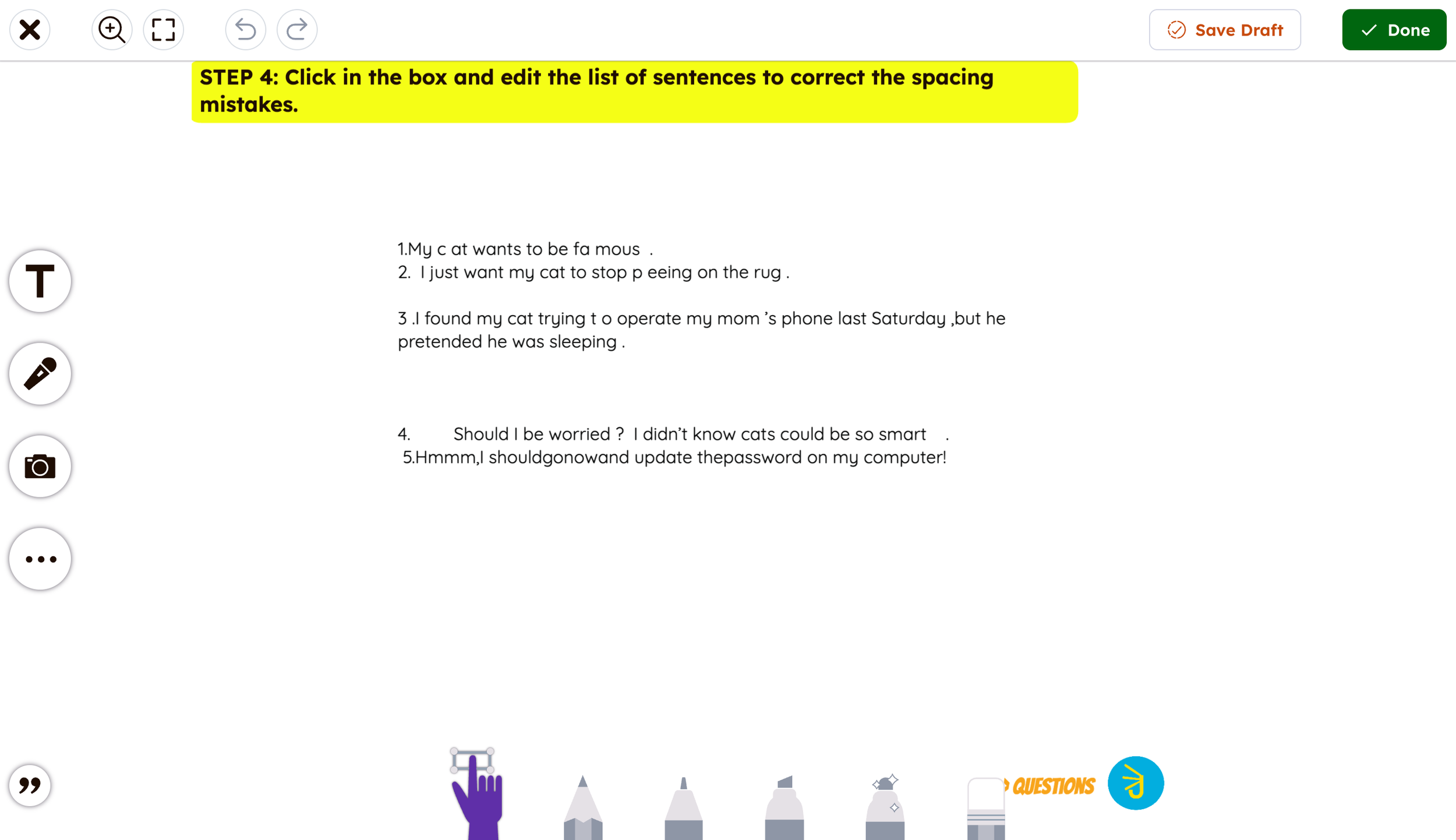
An example of an editing challenge from Lesson 1.1: Spacing. The editing challenges start gently and get progressively harder over the course of Level 1.
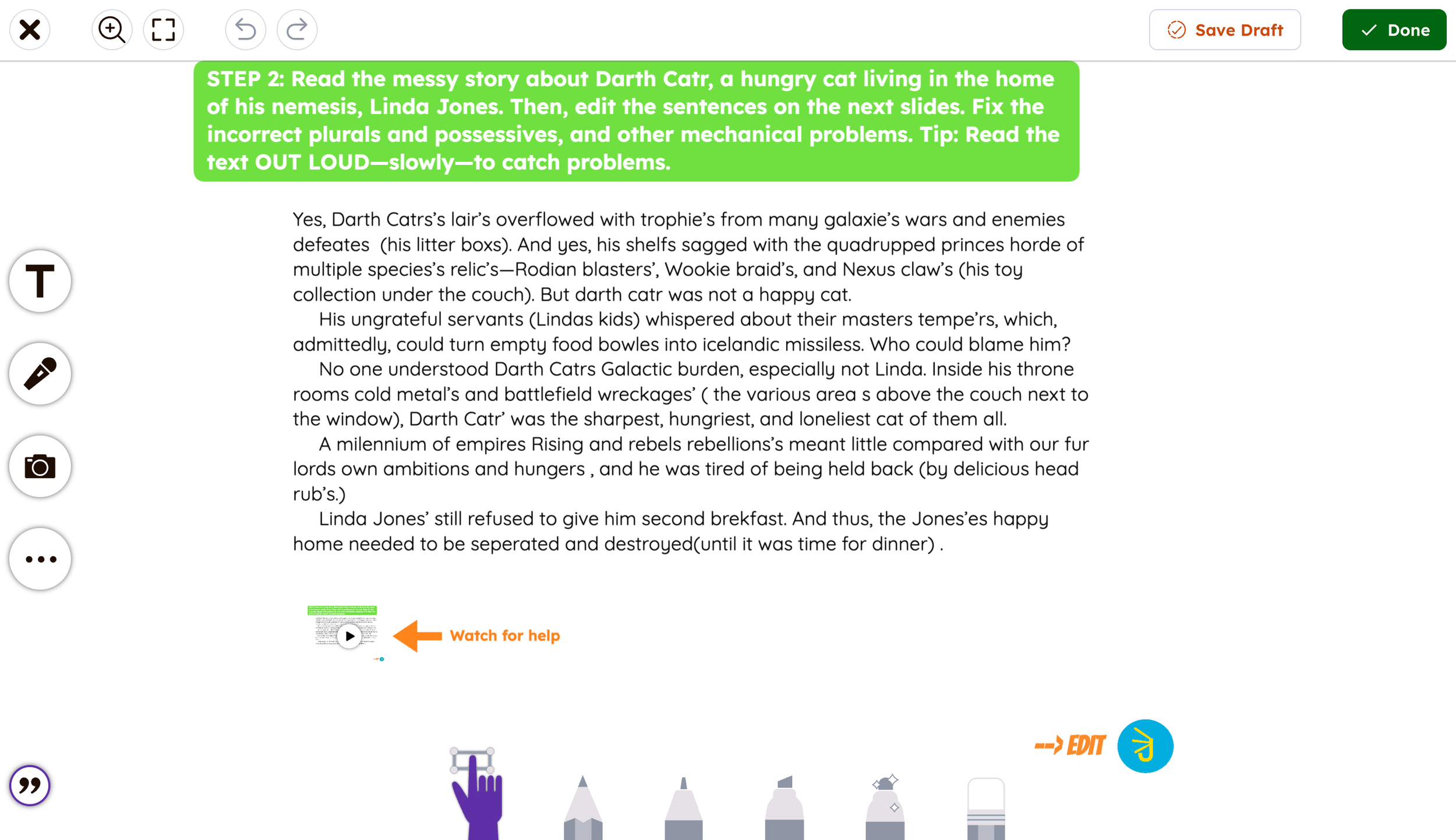
An example of an editing challenge from Lesson 1.8: Plurals & Possessives. By the time your child reaches this lesson, they will be ready to tackle longer editing challenges that cover a wide range of issues. Can you see the spacing, spelling, capitalization, and plural and possessive issues in this mini-story?
All of Level 1 is now available to purchase as downloadable individual print booklets or as one complete book here.
Level 2 Update
We’re now working on a similar update to our Level 2: Argument Foundations curriculum. Kids love the beginning of our Level 2 curriculum, so we’re taking the best of it and reworking the first four lessons of Level 2 to expand the time we spend on key elements of the pre-writing process while compressing others. The foundation of good argument writing is excellent and consistent thought work: brainstorming, analyzing what a text says (if relevant), and going deep into your thoughts to tease out what you want to say. Our update will include more coverage of specific strategies to help your child develop these habits, as well as continued instruction on building the elements of an argument (argument sentences, subclaims, etc.). We’re also doing our best to reduce the copying and pasting between practices as much as possible, though the sequence of lessons will remain cumulative as your child builds their original argument components and then puts them together into complete texts.
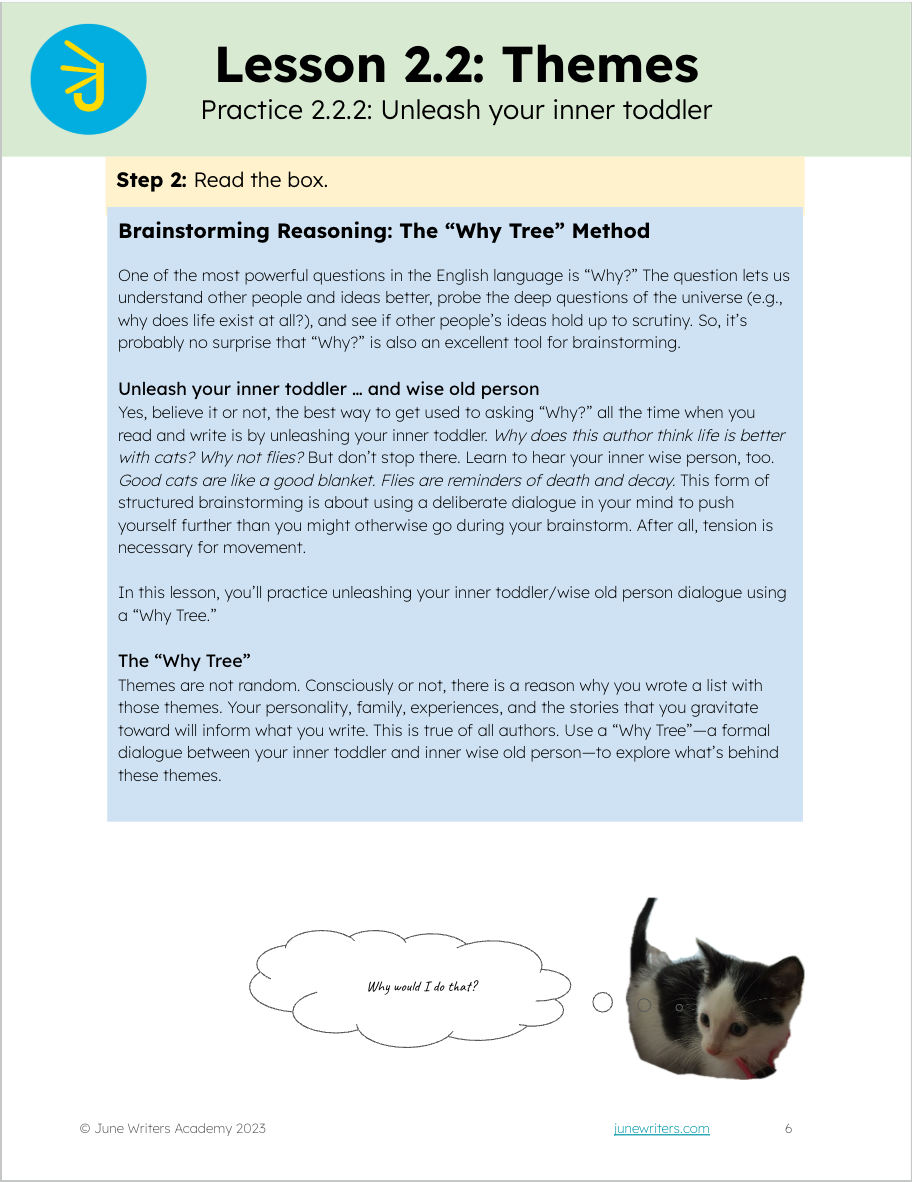
An excerpt of the overview of the “Why Tree” method we teach in the updated Lesson 2.2: Themes. This is a method that replicates the verbal approach we find successful for drawing out kids’ thoughts. It is a hybrid of the “Why Tree” method in the business/engineering world and the Socratic method, but is appropriate for elementary and middle school kids. We consistently hear from parents and kids that they love being asked these deep questions.
We hope to release the updated versions of Lesson 2.1: Brainstorming Ideas, Lesson 2.2: Themes, Lesson 2.3: Argument Components, and Lesson 2.4: Writing Arguments in our standard Full Membership program digital curriculum and in print format within the next two months. Once we complete this, we’ll move on to updates to the rest of Level 2.